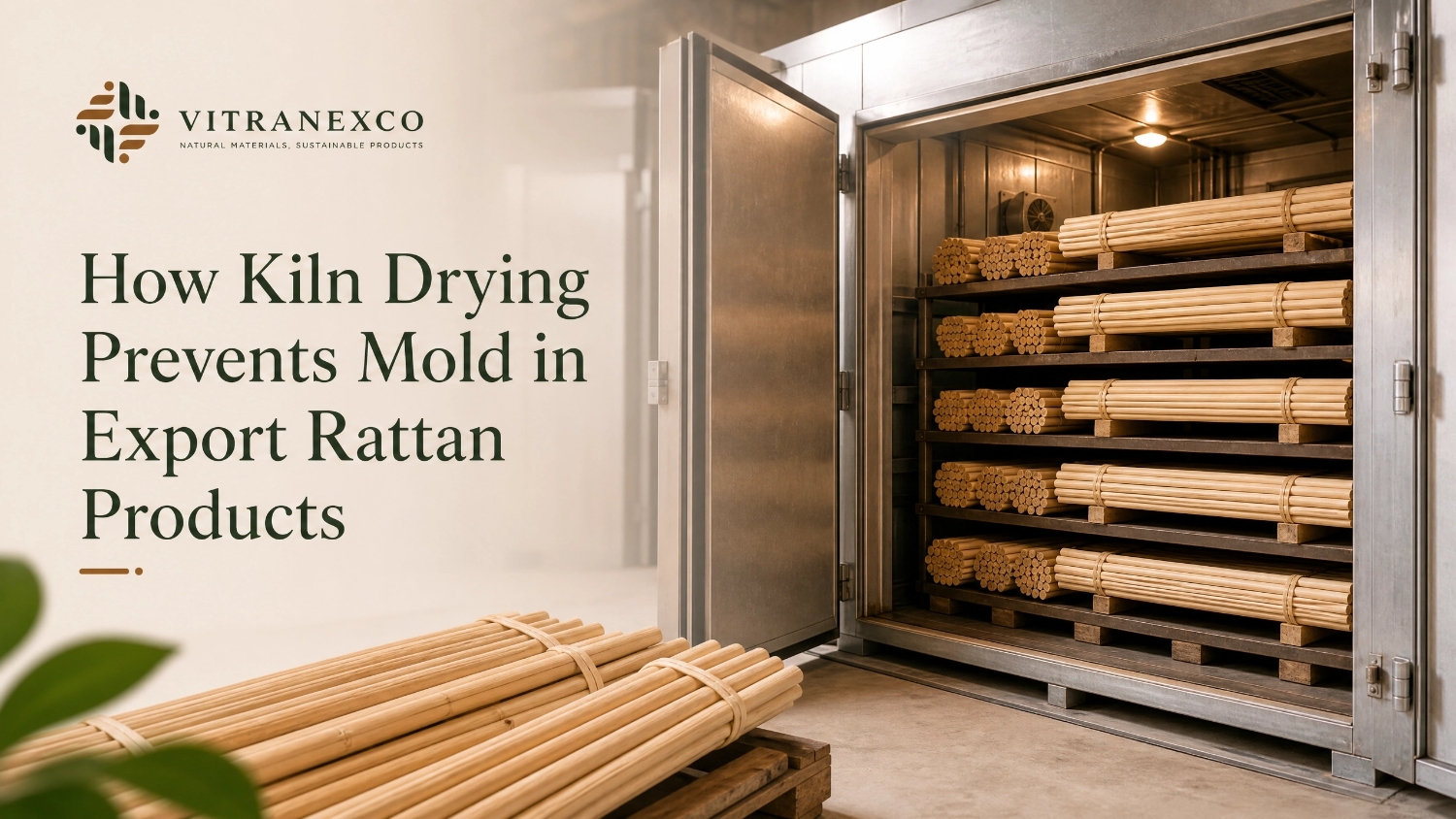
In export furniture supply chains, mold is one of the most common quality risks affecting natural rattan during shipping and storage.
Because rattan is a natural material, it easily reacts to humidity. If moisture is not properly controlled, it can lead to mold growth, surface damage, and unstable material performance during production. At Vitranexco, kiln drying is part of the standard processing workflow to stabilize rattan before export.
Natural rattan naturally retains moisture after harvesting. If this moisture is not properly reduced and stabilized, the material can continue to absorb humidity during storage and long-distance transport. This creates conditions that increase the risk of mold and quality degradation.
✦ The Cause: High internal cellular moisture combined with external environmental humidity.
✦ The Impact: Surface discoloration, weakened fibers, and loss of premium aesthetic quality.
✦ Shipping Risk: Extreme temperature changes inside sea containers trigger condensation (container sweat).

Kiln drying is used to reduce and stabilize moisture content in rattan under strictly controlled conditions. At Vitranexco, this advanced thermal process is applied together with an anti-mold treatment to ensure full export readiness.
✦ Structural Benefits: Improves material consistency across broad production batches.
✦ Transit Safety: Significantly minimizes the risk of mold during multi-week maritime transit.
✦ Industrial Prep: Optimally prepares the rattan core for heavy-duty manufacturing use.
For high-end furniture manufacturers and international importers, unstable moisture levels often lead to massive production bottlenecks, expensive product reworks, and inconsistent weaving results on the workshop floor.
✦ Predictability: Kiln drying makes the incoming raw material highly predictable and stable from day one.
✦ Efficiency: Drastically reduces weaving defects, structural twisting, and cracking under tension.
✦ Cost Reduction: Eliminates the financial losses tied to post-shipping mold claims and re-cleaning overheads.
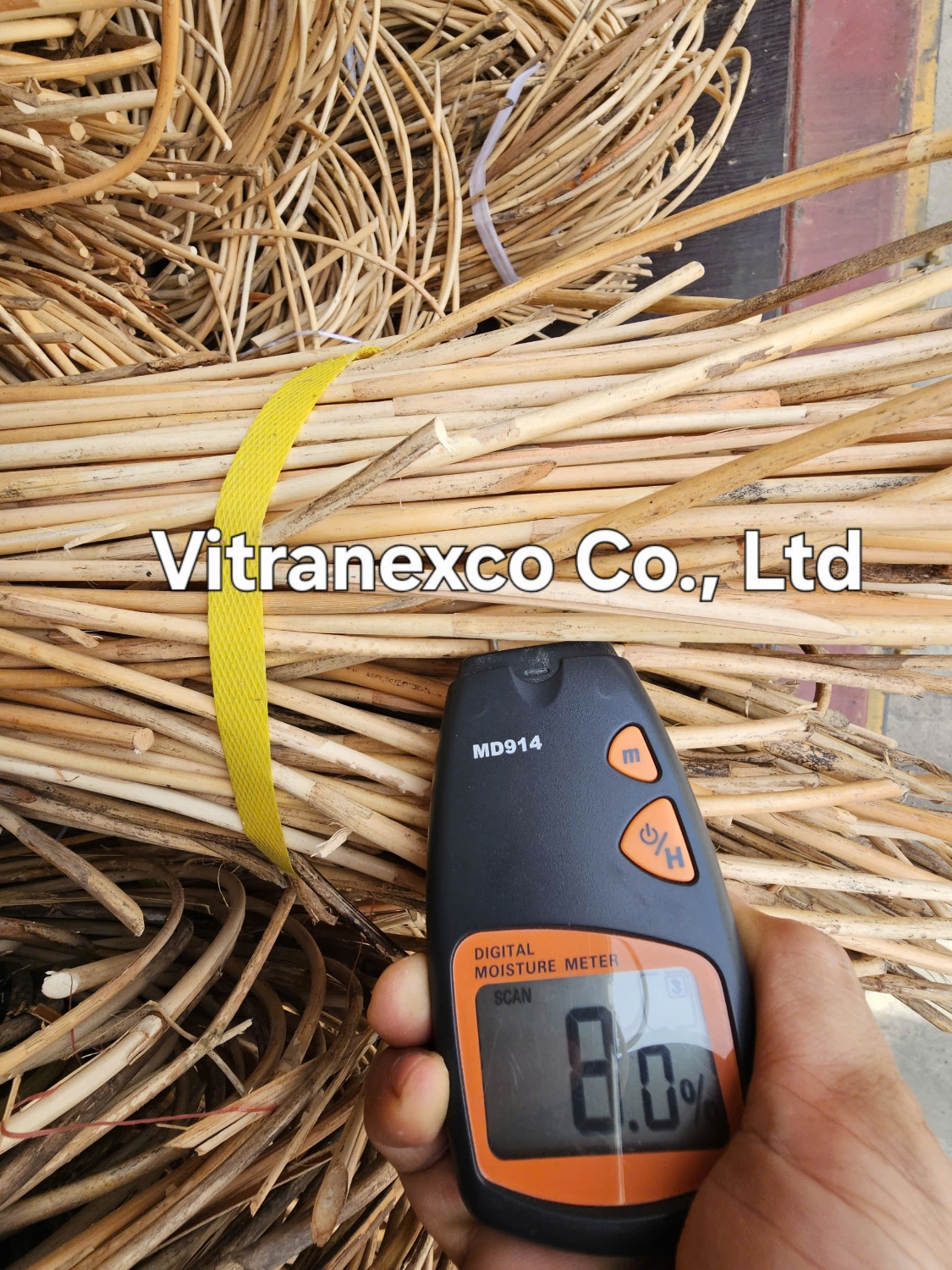
Moisture levels are systematically tested and maintained within the critical golden threshold before any bundle is allowed inside the packaging area.
By drying down the core's interior cells, our rattan successfully withstands severe microclimate shifts inside ocean freight containers moving through global ports.
Uniform fiber moisture guarantees a completely level playing field for post-weaving processes, including stains, clear lacquer seals, and industrial paint adhesion.
Controlling natural moisture variations means minimizing unforeseen splitting, breaking, or shape buckling across your entire commercial furniture run.
Partner with Vitranexco to safeguard your furniture supply chain from mold and moisture defects. Reach out to our international trade experts to discuss customized specs and wholesale orders.
Lead Time: 7 - 15 days
